
First, an introduction to Stainless Steel Cable Trays: They refer to a general term for rigid structural systems where supporting cables are tightly connected, consisting of straight sections, elbows, components, supports (arms), and hangers for trays or ladders. As an installation channel used in horizontal and vertical wiring systems, cable trays are standardized, serialized, and universal cable laying equipment utilized for telecommunications cables, power cables, and pipeline cables.
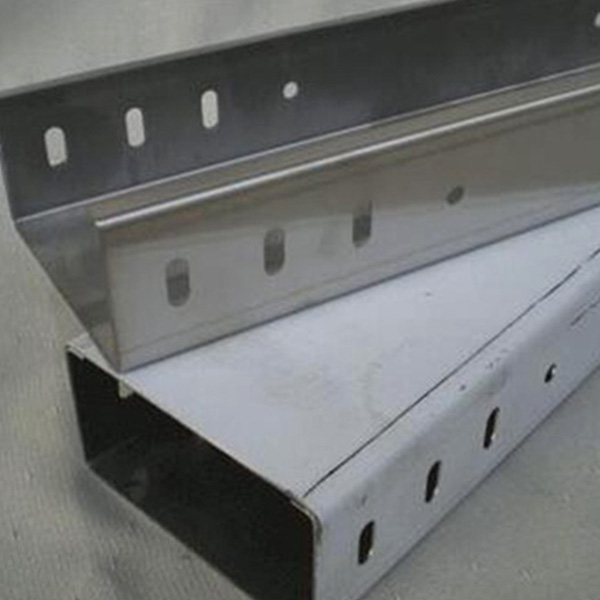
Two key indicators must be considered when selecting cable trays:
Load-bearing capacity: The working uniform load shall not exceed the rated uniform load.
Environmental adaptability: The tray shall meet requirements of different environments and have a long service life.
Current common practices to meet these requirements are:
Load-bearing capacity is achieved by selecting materials of appropriate thickness.
Environmental adaptability and service life are satisfied by choosing corresponding raw materials.
Future Development Prospects of Cable Trays
1. Load-Bearing Capacity Enhancement
Traditionally, the load-bearing capacity of cable trays is improved by increasing the thickness of the sheet metal.
2. Material and Surface Treatment Optimization for Environmental Adaptability
Heavy-corrosion environments: FRP (fiberglass-reinforced plastic) or aluminum alloy are generally used as the main materials for cable tray production.
General-corrosion environments: Steel is typically adopted as the main material. Steel cable trays undergo different surface treatments based on corrosion resistance requirements, including hot-dip galvanizing (HDG), thermosetting powder electrostatic coating, painting, and electrogalvanizing.
3. Structural Innovation for Stainless Steel Cable Trays
Due to the inherent material properties of FRP, stainless steel cable trays (note: corrected from "stainless steel" to "FRP" per context logic, as FRP is the material discussed) have certain limitations in load-bearing, torsion resistance, and tensile strength compared to steel cable trays. However, their high corrosion resistance makes them widely used in chemical and other industries.
To improve their strength, innovations can be made by referencing the structure of Aluminum Alloy Cable Trays:
Design the four sides as hollow profile structures.
Incorporate steel reinforcement liners.
Compared with the original structure, this optimized design can enhance structural strength, torsion resistance, and tensile strength while consuming the same amount of raw materials.
This website uses cookies to ensure you get the best experience on our website.

 Español
 Portugues
 Pусский
 العربية



 WhatsApp
 Phone
Phone E-mail
Comment
(0)