
Many people feel confused when selecting cable trays and don’t know how to choose. In fact, the selection of cable tray models is extremely important. Next, our company will detailedly introduce relevant knowledge about cable trays! We believe understanding this will be of great help to you.
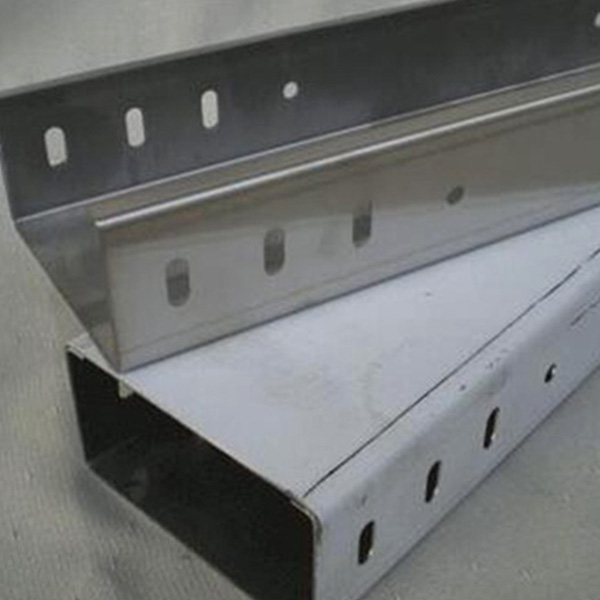
Cable Tray Selection and Design
Power and weak current lines shall be laid in separate troughs. When junction boxes (enclosures) intersect, they must be separated by metal partitions.
Power and weak current conductors shall not be in direct contact with the troughs.
All connections in floor troughs are only allowed at the outlets of junction boxes.
During the construction and installation of floor troughs, all troughs shall be connected into a reliably grounded integral system.
Surveying and Positioning
Mark the installation position of the cable tray using the line-snapping method, determine the fixed positions of supports, and make marks.
The installation reference line shall be determined by the plumb line method for positioning the tray in shafts.
If the reserved holes are inappropriate, adjust and repair them in a timely manner.
Fabrication and Installation of Cable Trays
Positioning and Support Fabrication: Position according to the design elevation and tray specifications in the construction drawings, fabricate supports based on the measured dimensions, and then carry out industrialized production.
Installation Methods:
Without a suspended ceiling: Hoist along the beam bottom or install with wall supports.
With a suspended ceiling: Hoist inside the ceiling or install with wall supports.
For structural components without a suspended ceiling in public areas, install against the wall (with column supports or on the lower chord members of roof trusses) considering architectural aesthetics and maintenance accessibility.
Support Fixing: Supports installed against the wall shall be fixed with expansion bolts, with a spacing not exceeding 2m. Additional supports/hangers shall be installed at the junctions of straight and non-straight sections, building expansion joints, and the middle of non-straight sections with a bending radius greater than 300mm. The installation of supports/hangers shall ensure the tray meets horizontal or vertical requirements.
Special Requirements for Fabrication and Installation
For trays with special shapes, the on-site measured dimensions shall be submitted to the material supplier for customized fabrication to reduce on-site processing. The material, model, thickness, and accessories of the tray shall comply with design requirements.
Before tray installation, coordinate with all professional disciplines to avoid conflicts with large-diameter fire-fighting pipes, sprinkler pipes, hot and cold water pipes, drainage pipes, and air conditioning/ventilation equipment.
Tray Installation Procedures
Lift the tray to the predetermined position and fix it to the supports with bolts. Carefully verify the dimensions at bends.
The tray shall be consistent with the building slope. For trays installed on the walls of arc-shaped buildings, the arc shall match the building.
Connect trays with connecting plates using flat-head bolts (flat heads on the inner side of the tray). The gap between trays must meet design requirements to ensure the tray system is connected as an integral unit.
Trays spanning building expansion joints shall be treated with expansion joints in accordance with the enterprise standard Steel Cable Tray Installation Process. For steel trays with straight sections exceeding 30m, thermal expansion and contraction compensation devices shall be installed.
Installation Quality Requirements
Trays shall be installed horizontally and vertically, neatly and aesthetically, with consistent spacing and firm connections.
The horizontal deviation within the same horizontal plane shall not exceed 5mm/m, and the straightness deviation shall not exceed 5mm/m.
This website uses cookies to ensure you get the best experience on our website.

 Español
 Portugues
 Pусский
 العربية



 WhatsApp
 Phone
Phone E-mail
Comment
(0)