
People usually have a one-sided understanding of cable trays. In fact, cable trays feature an aesthetic appearance, simple structure, flexible configuration, and convenient maintenance. Below, Dexian Metal Products Co., Ltd. will introduce the grounding treatment methods for Galvanized cable trays.
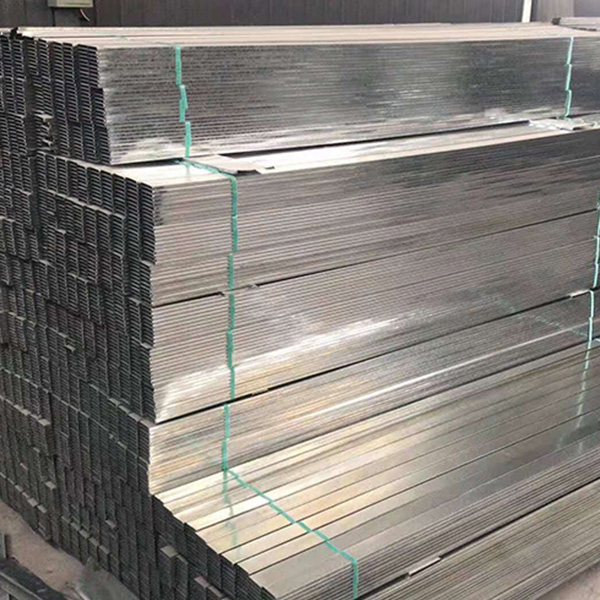
Grounding Treatment
Galvanized connecting plates of cable trays can be used as jumpers to connect trays together.
Galvanized spring washers shall be installed on the two connecting bolts at both ends of the connecting plate.
The tray shall be bridged with flexible copper wire of not less than 4mm², and then connected to the grounding wire to form an electrical path.
The connection between the tray and the main grounding conductor shall not be less than two points.
Installation of Multi-Layer Trays
Install the upper layer first, then the lower layer. Leave a margin between the upper and lower layers to facilitate subsequent cable laying and maintenance.
The net distance between horizontally adjacent trays shall not be less than 50mm.
The interlayer distance shall be not less than 150mm based on the tray width, and not less than 0.5m from weak current cable trays.
Learn About the Grounding Treatment Methods of Cable Trays
1. Determine Environmental Conditions
There are generally three types of environmental conditions: corrosive environment, normal environment, and special environment.
2. Determine Routing Direction
Indoor: Along walls, columns, beams, or floor slabs according to the routing of most cables.
Outdoor: Along process pipelines as much as possible.
3. Load Calculation
Calculate the weight per unit length (q) and total load (G_total) of cables on the cross-section of the cable tray routing:Formula: G_total = n₁q₁ + n₂q₂ + … + nₙqₙ
q₁, q₂, q₃…qₙ: Weight per unit length of each cable (kg/m)
n₁, n₂, n₃…nₙ: Number of cables of the same type
G_permissible: Permissible load of the cable tray (refer to the load curve chart)
4. Select Cable Trays
Based on the cable load and the installation environment, determine the tray type, specifications, column spacing, support arm length, number of layers, and column length by referring to the tray load curve.
5. Determine Fixing Methods
Select the fixing method according to the cable routing and installation environment:
Suspended type, vertical type (both can be single-sided or double-sided fixed), wall-mounted type, etc.
6. Arrange Cable Layers and Interlayer Distances
The layer arrangement of cables on the tray (from top to bottom) is as follows:
Weak current control cables
General control cables
Low-voltage power cables
High-voltage power cables
This arrangement is conducive to shielding interference, ventilation, and heat dissipation.
This website uses cookies to ensure you get the best experience on our website.

 Español
 Portugues
 Pусский
 العربية



 WhatsApp
 Phone
Phone E-mail
Comment
(0)